
Kitchen Basics · Food Safety · CozyPrac
How to Tell if Eggs Are Still Good
The date on the carton isn’t the full story. Here are three quick tests that actually tell you what’s going on inside the shell.
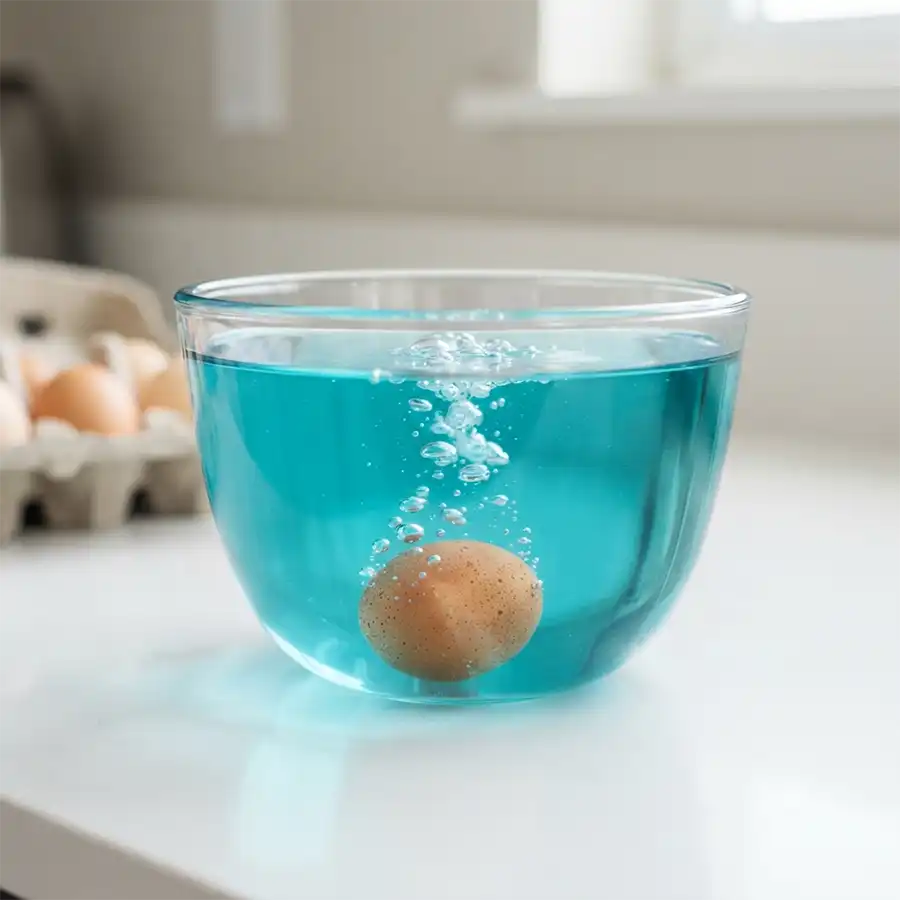
The quickest way to tell if an egg is still good is the float test: place it in a bowl of cold water. If it sinks and lies flat, it’s fresh. If it stands upright or floats, it’s time to toss it. 🥚
Knowing how to tell if eggs are still good comes down to three simple checks, each one taking less than 30 seconds. None of them require special equipment, just a bowl of water and your own senses.
Three Tests, Fastest to Most Accurate
The Float Test
Drop the egg into a bowl of cold water. As an egg ages, it loses moisture through the shell and the air pocket inside grows — that air pocket is what makes an old egg float.
Sinks flat = fresh · Stands upright = use soon · Floats = toss itThe Sniff Test
Crack the egg into a separate bowl (not directly into whatever you’re cooking) and smell it. A bad egg has an unmistakable sulfur smell — there’s no confusing it with a fresh one. If it smells like nothing unusual, it’s fine.
The Visual Check
Once cracked, look at the white and yolk. Fresh eggs have a thick, cloudy-ish white that holds its shape and a firm, rounded yolk. Watery whites and flat yolks are signs of age — not necessarily unsafe yet, but past their best for frying or poaching.
What the Date on the Carton Actually Means
How Long Eggs Actually Last
| Storage | Typical Timeframe |
|---|---|
| Raw, in the fridge | 3-5 weeks past the pack date |
| Raw, at room temperature | Use within a few hours — don’t leave out |
| Hard-boiled, in the fridge | About 1 week |
| Raw, cracked in a sealed container | 2-4 days |
The single biggest factor isn’t the date on the carton — it’s whether the egg has stayed consistently cold. Eggs that go through temperature swings (left out, then refrigerated, repeatedly) age faster than the timeline above suggests. The FoodSafety.gov egg storage guidance is a good reference if you want the official federal recommendations alongside these quick tests.
How to Tell if Eggs Are Still Good: When in Doubt, Throw It Out
If an egg fails more than one test — floats and smells off, for example — don’t try to salvage it by cooking it thoroughly. Heat doesn’t reliably destroy every risk in a genuinely spoiled egg, and the tests above are quick enough that there’s rarely a good reason to take the chance. When in doubt, it genuinely isn’t worth the risk over the cost of a single egg.
Egg Freshness FAQ
How can you tell if an egg is still fresh?
Fill a bowl with cold water and gently drop the egg in. A fresh egg sinks and rests on its side at the bottom. An egg that’s a few weeks old will stand upright, and one that floats to the surface has gone bad and should be thrown out.
What is the float test for eggs?
The float test uses water density to estimate an egg’s age. As an egg ages, the air pocket inside grows because moisture evaporates through its shell. A larger air pocket makes the egg more buoyant, so older eggs stand up or float instead of sinking flat.
How long do eggs last in the fridge?
Properly refrigerated eggs typically stay fresh for 3 to 5 weeks past their pack date, as long as they’re kept at a consistent temperature below 40°F. Storing them in their original carton, away from the fridge door, helps them last closer to the longer end of that range.
Is it safe to eat an egg past its expiration date?
Often, yes — the printed date is usually a sell-by estimate, not a safety cutoff. If an egg passes the float test, has no odor, and looks normal when cracked open, it’s typically still safe to eat even a few weeks past that date.
Cooking a Lot of Eggs Lately?
If eggs are becoming a weekly staple, it might be worth finding out whether an egg cooker actually earns its counter space — or if a pot of water still does the job just fine.
→ Is an Egg Cooker Worth It?