Small Kitchens · Buying Guide · CozyPrac
Is a Vacuum Sealer Worth It
for a Small Kitchen?
It sounds like a solution to freezer burn and grocery waste — but is it actually worth the counter space? Here’s an honest, no-hype breakdown, including the real numbers.
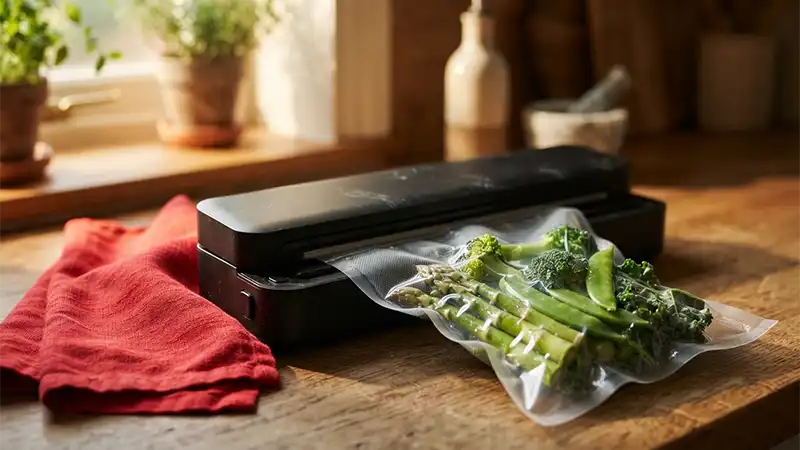
Is a vacuum sealer worth it for a small kitchen, or is it another appliance that sounds useful in theory and ends up in a cabinet after two uses? It’s a fair question, especially in a small kitchen where every appliance has to earn its spot.
We’re not here to sell you on it either way. Let’s look at the real downsides, how much it could actually save you, and what type genuinely makes sense — so you can decide for yourself.
5 Reasons People Actually Buy One
It Actually Stops Freezer Burn
Removing air is the single biggest reason food goes freezer-bad. Vacuum-sealed meat and fish routinely last 2-3 years in the freezer instead of a few months, with barely any texture change.
Bulk Buying Finally Makes Sense
Buying meat or produce in bulk only saves money if you actually use it before it spoils. A vacuum sealer turns that big discount pack into portioned meals you’ll actually get to.
Coffee and Snacks Stay Fresh Longer
It’s not just for meat. Resealing an opened bag of coffee, nuts, or chips keeps them from going stale days before you’d normally toss them.
Meal Prep Stops Meaning Mushy Leftovers
Batch-cooked meals frozen in a standard bag often come out with ice crystals or freezer burn. Vacuum sealing keeps texture and flavor close to day-one, so meal prep is actually worth doing.
It Opens the Door to Sous Vide
If you’ve been curious about sous vide, you need sealed bags to do it properly. A vacuum sealer is the one piece of equipment standing between you and restaurant-style, evenly cooked meat.
Is a Vacuum Sealer Worth It for a Small Kitchen? The Real Downsides First
Let’s start with the criticism, since it’s usually the part reviews skip. The most common complaints, based on real owner reviews, come down to a handful of recurring issues:
None of these are dealbreakers on their own, but they explain why “is it worth it” is such a common search before buying one — it’s a legitimate question, not just marketing skepticism.
When a Vacuum Sealer Genuinely Earns Its Counter Space
Here’s where a vacuum sealer is worth it for a small kitchen, particularly for smaller households:
Worth It If…
- You buy meat or produce in bulk and want to portion it for the freezer
- You meal prep and hate losing batch-cooked food to freezer burn
- You cook sous vide, which needs sealed bags anyway
- You’ve thrown out freezer-burned food more than once this year
Skip It If…
- You shop for just a few days at a time and rarely buy in bulk
- Your freezer is already full with no room for bulk portions
- You won’t keep up with buying replacement bags
- Your current storage habits already keep waste low
How Much Could a Vacuum Sealer Actually Save You?
If you’re still weighing whether a vacuum sealer is worth it for a small kitchen, here’s the honest math, not marketing math. According to the USDA, food waste costs the average American household hundreds to thousands of dollars a year, and separate USDA-based analysis puts food waste at roughly 11% of what you actually spend on groceries. Not all of that is freezer-burn-related — some is produce that goes bad, some is just over-buying — so a vacuum sealer won’t recover all of it. But it can meaningfully cut the portion caused by spoilage and freezer burn specifically.
💰 Quick Estimate: What Could You Save?
Enter your average monthly grocery spend to see a conservative, honest estimate.
Based on USDA-linked estimates that food waste runs about 11% of grocery spending. This is a conservative estimate, not a guarantee.
Edge Sealer or Chamber Sealer — Which Do You Actually Need?
This is one of the most common points of confusion before buying. Edge (external) sealers — the kind most home cooks buy, usually $30-$80 — clamp the open end of a bag and pull the air out. They’re compact, affordable, and fine for most everyday use, but they genuinely struggle with liquids and juicy foods unless you freeze the item solid first.
Chamber sealers place the entire bag inside a sealed chamber, so they handle liquids and marinades without a fight. The catch: they’re bigger, heavier, and usually run $300-$700+. For a small kitchen, this is almost always overkill — chamber sealers make sense for serious home butchers or people sealing liquid-heavy food constantly, not typical small-kitchen use.
For most people deciding if a vacuum sealer is worth it for a small kitchen, an edge sealer is the right call. Our compact vacuum sealer comparison covers three solid edge sealer options if you’ve decided it’s worth it.
Not everything belongs in the freezer, though. For the fridge side of food storage, a good set of airtight storage containers covers the gap a vacuum sealer doesn’t.
Our Honest Take: Is a Vacuum Sealer Worth It for a Small Kitchen?
If you regularly buy in bulk, meal prep, or keep losing food to freezer burn, a vacuum sealer is genuinely worth it — the math on food waste alone tends to pay it off within months, not years.
If you shop in small quantities and rarely have extra to freeze, you can probably skip it without missing much.
Decided it’s worth it? Here’s where to start:
→ See Our Top 3 Compact Vacuum Sealer Picks