Small Kitchens · Egg Cookers · Honest Guides
5 Egg Cooker Mistakes
Ruining Your Morning Eggs
Same cooker, different eggs every time?
It’s probably not the machine — it’s one of these five habits.
The most common egg cooker mistakes come down to two things: guessing the water instead of measuring it, and skipping the ice bath after cooking.
Both wreck your eggs before they even hit the plate — and neither one means your machine is broken.
Here are the five egg cooker mistakes we see most often, and the easy fix for each. 🥚
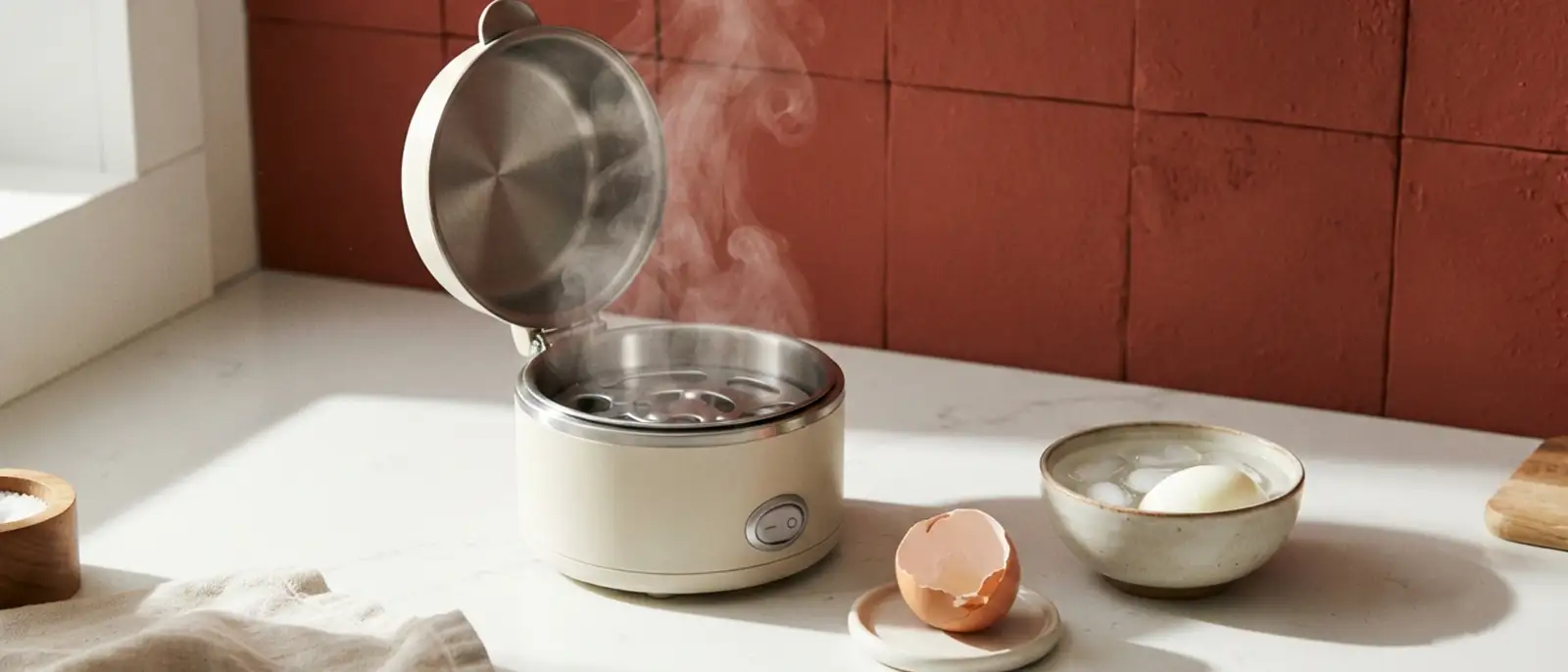
The 5 Egg Cooker Mistakes to Watch For
Eyeballing the Water Instead of Measuring It
Electric egg cookers work by turning a measured amount of water into steam — that water level is what actually controls whether you land on soft, medium, or hard yolks. Pour in “about the same as last time” and you’ll get a different result every single time.
Skipping the Ice Bath After Cooking
Eggs keep cooking from residual heat even after the cycle ends. Skip the ice bath and you’ll overshoot your target doneness every time — soft turns medium, medium turns hard. It also makes peeling noticeably harder, since the shell membrane bonds tighter to the white as it cools slowly.
Cooking Cold Eggs Straight From the Fridge
Most egg cooker timing charts assume room-temperature eggs. Cold eggs need extra time to reach the same doneness, and skipping that adjustment is a quiet, common reason for pulling out eggs runnier than you wanted.
Getting the Piercing Step Wrong for Your Model
Some egg cookers rely on a built-in piercing pin at the base of the tray to release pressure and stop shells from cracking mid-cook. Others don’t use one at all. Doing the wrong thing for your specific model is a common source of cracked shells and leaking whites.
Overcrowding the Tray
Squeezing in one or two extra eggs past the tray’s design capacity blocks even steam circulation. Eggs on the edges cook faster than the ones in the middle, leaving you with a mixed batch of over- and under-done eggs from a single cycle.
None of these egg cooker mistakes mean you need a new machine — they’re habits, and habits are easy to fix once you know what to look for.
For more on how long cooked eggs actually stay safe to eat, the USDA’s egg safety guidelines lay it out clearly. 🍳
Still Shopping for an Egg Cooker?
Now that you know the egg cooker mistakes to avoid, here’s where to find one worth avoiding them for.
We compared three compact egg cookers for small kitchens — one for reliability, one for design, one for budget.
→ See the Egg Cooker Comparison