Small Kitchens · Rice Cookers · Honest Guides
5 Rice Cooker Mistakes
Turning Your Rice to Mush
Same cooker, gummy rice every time?
It’s probably not the machine — it’s one of these five habits.
The most common rice cooker mistake is skipping the rinse — leftover surface starch is exactly what makes rice turn gummy instead of fluffy.
That’s just the first one. A few of these mistakes affect taste and texture, and one of them is a genuine food safety issue worth taking seriously.
Here are the five rice cooker mistakes we see most often, and the easy fix for each. 🍚
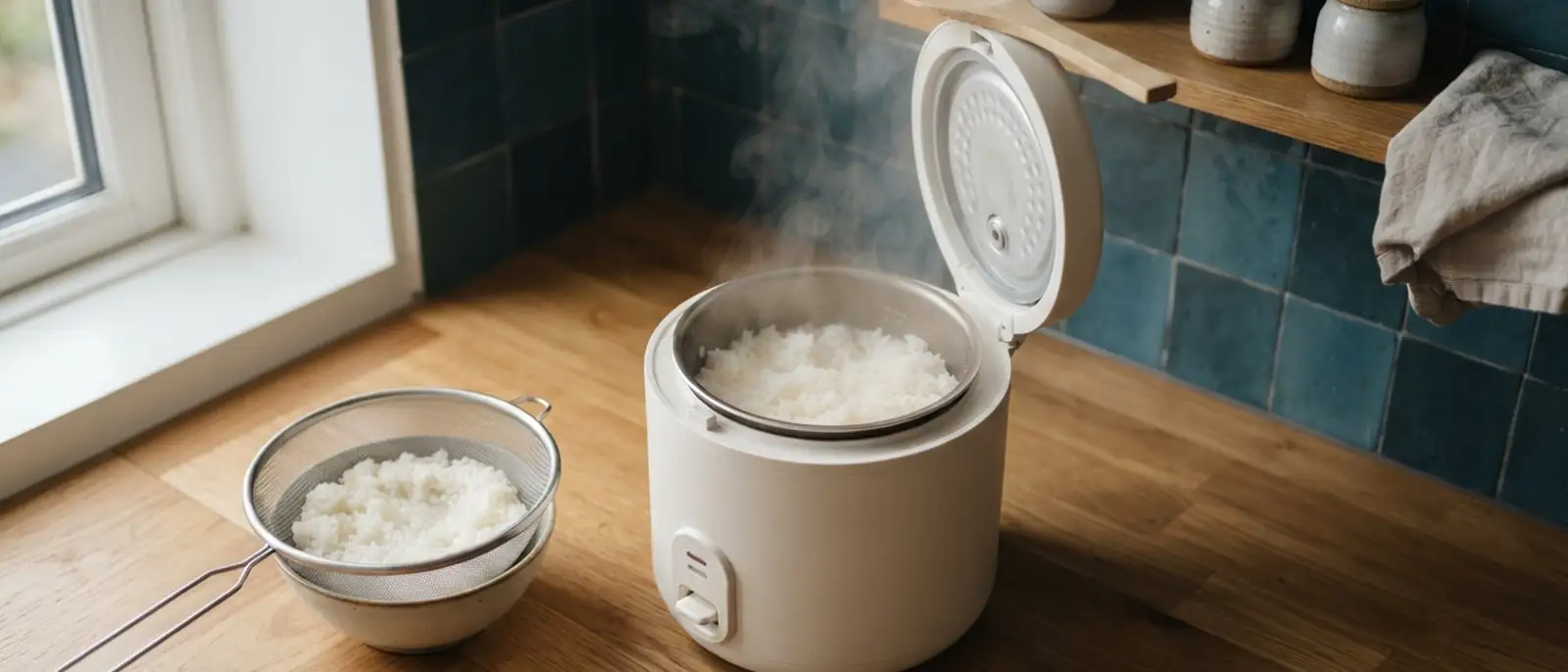
The 5 Rice Cooker Mistakes to Watch For
Skipping the Rinse
Raw rice is coated in surface starch left over from milling. Cook it without rinsing and that starch cooks into the water around it — which is exactly what makes rice clump together instead of separating into distinct, fluffy grains.
Guessing the Water-to-Rice Ratio
Different rice types need different amounts of water — white, brown, and jasmine rice don’t behave the same way. Eyeballing it “the same as always” across rice types is one of the most common reasons for mushy or undercooked batches.
Opening the Lid Mid-Cook
Rice cookers work by trapping steam to cook evenly from all sides. Lift the lid to check on things partway through and you let that steam escape, which extends cooking time and can leave you with rice that’s unevenly cooked — dry on top, wet at the bottom.
Scraping the Inner Pot With Metal Utensils
Nearly every rice cooker pot has a nonstick coating. Metal spoons and spatulas scratch that coating over time, and once it’s compromised, rice starts sticking and burning onto the exposed metal underneath.
Leaving Cooked Rice on “Keep Warm” for Hours, or Out at Room Temperature
This one is about food safety, not just texture. Rice can carry a bacteria called Bacillus cereus that survives cooking as a spore. Left sitting in the “danger zone” between 40°F and 140°F for too long, those spores can multiply and produce a toxin that reheating won’t destroy.
None of these rice cooker mistakes mean you need a new machine — they’re habits, and habits are easy to fix once you know what to look for. For more on how Bacillus cereus survives cooking, the USDA’s foodborne illness fact sheet breaks down exactly how it happens. 🌾
Still Shopping for a Rice Cooker?
Now that you know the rice cooker mistakes to avoid, here’s where to find one worth avoiding them for.
We compared three compact rice cookers for small kitchens — one for reliability, one for design, one for budget.
→ See the Rice Cooker Comparison