
Weekday Breakfasts · Omelet Maker Reviews · No-Nonsense Take
Is the Holstein Omelet Maker Worth It?
A Look at 19,900+ Amazon Reviews
Nearly 20,000 people have rated this compact 2-section omelet maker, and the reviews paint a pretty consistent picture — fast, easy, and a little unpredictable on timing until you get the hang of it.
Is the Holstein omelet maker worth it? For most of the 19,900+ people who’ve rated it, yes. This two-section machine delivers on its core promise — a fast, no-flip omelet with barely any pan to scrub — often in under ten minutes. Where it falls short is honesty about timing: the indicator lights only confirm the unit is hot enough to start cooking, never that your eggs are actually finished.
This isn’t a hands-on test. It’s a synthesis of Amazon’s own AI-generated review summary and 19,900+ verified ratings, paraphrased and organized by theme rather than quoted directly. The overall tone runs enthusiastic, but there’s one specific, recurring frustration worth flagging before your first attempt. 🍳
🧭 Quick Navigation
🍳 Straight Talk
If what you want from a Holstein omelet maker is a genuinely faster, cleaner way to make two omelets before work, this delivers — no flipping, no scrubbing a frying pan, and cleanup takes seconds once you know to grease it first. If you want an appliance that tells you exactly when to stop cooking, look elsewhere — that part is entirely on you, and the housing runs hot enough that you’ll want to keep your distance while it works.
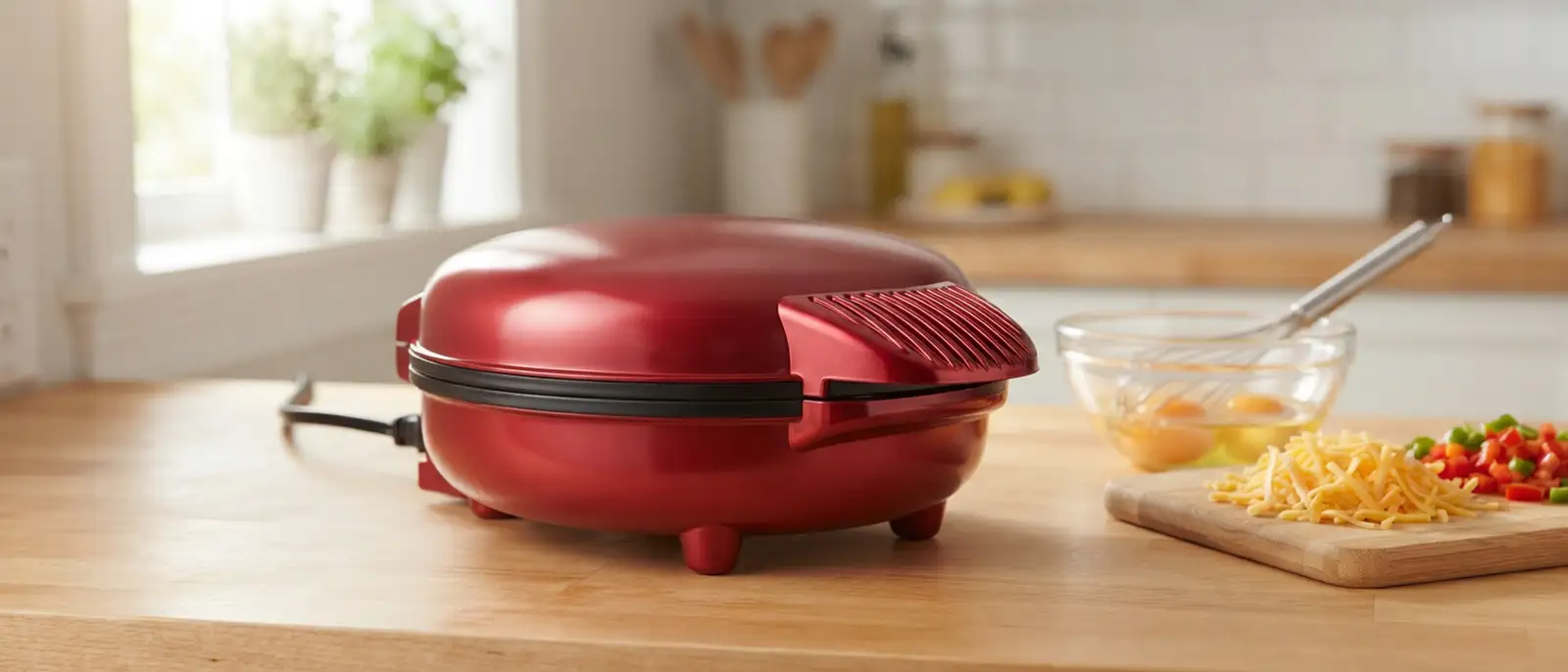
Holstein Housewares Stainless Steel 2-Section Omelet & Frittata Maker
Fast, easy, and a little unpredictable — until you find your rhythm
Reviewed here in Metallic Red — also available in Black, same specs either way.
Buyers who reach for a Holstein omelet maker tend to have the same morning problem: they want real eggs, not cereal, but don’t have ten extra minutes to babysit a frying pan. Busy parents before the school run, people doing keto or low-carb who eat eggs more than once a day, and anyone who’d rather skip flipping anything first thing in the morning all show up repeatedly in the reviews. It’s not just for omelets, either — frittatas, pizza pockets, apple turnovers, and even vegan patties get mentioned once people have the timing down.
A handful of things come up again and again regardless of who’s writing the review: it’s easy to use, cleanup is minimal once the plates are greased, and it doesn’t hog cabinet space. The texture is where opinions get more specific — several reviewers describe it as more evenly set and slightly cake-like than a pan-cooked omelet, with a browned exterior. Most people say it still tastes great; a few just want it on record that it’s a different kind of omelet, not a lesser one.
The gap between the spec sheet and real use: the listing describes indicator lights that “guide you to start cooking at the optimal temperature” — which is accurate, as far as it goes. They tell you when to pour the eggs in. They say nothing about when to take them out. Reported cook times run anywhere from 5 to 12 minutes depending on the unit and how full each side is, and more than one buyer’s first omelet came out overcooked while they figured that out.
What Customers Are Saying
Loved
- Genuinely mess-free — no flipping, no frying pan to scrub
- Cleanup takes seconds once you grease the plates first
- Compact enough to store in a cabinet without a fight
- Versatile well beyond omelets — frittatas, turnovers, even vegan patties
Watch Out
- No timer or “done” signal — you learn timing by trial and error
- Reported cook times vary widely, from about 5 to 12 minutes
- Outer housing gets genuinely hot during use — keep kids clear
- Non-stick coating reportedly starts wearing after about 6 months
Bottom line: if a genuinely faster, no-flip way to make eggs sounds appealing, this earns its 4.4 stars easily. Budget for a slightly overcooked first attempt or two — most owners say the learning curve is short and worth it.
*Affiliate link — we may earn a small commission at no extra cost to you.
💡 Looking for other small, affordable kitchen finds?
We keep a running list of budget-friendly picks we actually recommend.
See Budget Finds →
The Timing Problem, Explained
Reading through enough of these reviews, one pattern shows up more than any other: people love the appliance right up until they hit the timing question. The indicator system only confirms two things — that it’s plugged in, and that it’s hot. It doesn’t confirm doneness at any point. One reviewer swears by 5 minutes; another follows the printed 10-to-12-minute guidance and still lifts the lid at the wrong moment depending on the day. A few describe real inconsistency between units — burnt eggs for one person, a runny middle for another, both following the same steps.
None of this seems to be permanent, though. Owners who’ve made a few omelets with their Holstein omelet maker consistently report finding their own sweet spot — usually somewhere between 6 and 8 minutes — and sticking with it. Two small habits speed that process up: watching for the lid to rise slightly on its own as a doneness cue, and poking a small hole in the center partway through so the middle finishes evenly.
Should You Buy One?
Buy it if you want a faster, cleaner alternative to a frying pan for one or two portions of eggs on a normal weekday — this is where the Holstein omelet maker earns its keep, whether that’s a school-morning routine or a keto meal-prep habit.
Skip it if restaurant-style texture matters to you, or if you’d rather not deal with any trial and error — the first attempt or two rarely comes out perfect.
For an everyday breakfast shortcut, though, it holds up well once you’ve found your timing.
Rookie Mistakes Worth Avoiding
The vast majority of reviews never mention any of this. But a few specific, avoidable mistakes come up often enough to flag. The housing runs genuinely hot during use, and more than one buyer warns against touching it while it’s plugged in — even the painted sections. There’s no power switch, so unplugging is the only way to stop it. A couple of reviewers also describe egg mixture overflowing into the base when a portion gets overfilled — easy to avoid once you know the fill line matters.
The non-stick coating is worth watching too. Amazon’s own review summary notes it can start peeling after roughly six months of regular use, a detail a few longer-term owners confirm independently. Greasing the plates before each use and skipping metal utensils are the two habits people credit most for stretching its lifespan.
🥚 Don’t overfill either side
Reviewers who avoid spills stick to about 3 eggs total split across both portions, filling only halfway before adding toppings, then topping off carefully.
🖐️ Keep hands (and kids) clear
The housing gets hot enough to burn, and there’s no cool-touch handle. The U.S. Consumer Product Safety Commission’s general guidance on small appliances recommends unplugging countertop cookers as soon as you’re done and letting them cool before moving them.
🧈 Grease it before you pour
A light coat of butter or oil on the plates, even with the non-stick coating, is what most reviewers credit for effortless release and easier long-term cleanup.
⏱️ Watch the lid, not the clock
Several owners say the lid rising slightly is a more reliable doneness cue than any fixed number of minutes — check around the 6-to-8-minute mark and adjust from there.
Frequently Asked Questions
Does the Holstein omelet maker have a timer?
No. It has indicator lights that show when the unit is preheated and ready for eggs, but nothing that signals when the omelet itself is done. Most owners land on a personal timing — often 6 to 8 minutes — after a few uses.
Why did my omelet turn out overcooked or undercooked?
Cook times vary by unit, recipe, and how full each portion is — reviewers report anywhere from 5 to 12 minutes. Watching for the lid to rise slightly, rather than relying on a fixed number, tends to give more consistent results.
Does the outside of the omelet maker get hot?
Yes, genuinely hot — several reviewers specifically warn not to touch the housing while it’s plugged in or shortly after. Keep it away from kids during and immediately after use, and unplug it as soon as you’re finished.
How long does the non-stick coating last?
Most buyers get well beyond six months without issue, but Amazon’s own review summary and a handful of longer-term owners note the coating can start wearing after about that point. Greasing the plates before each use and avoiding metal utensils appear to extend its life.
A Faster Breakfast, With One Small Catch
It cooks eggs faster than a pan, cleans up in seconds, and stretches well past basic omelets into frittatas and more — solid reasons behind the Holstein omelet maker’s 19,900+ ratings. Just know your first attempt is likely to be a little off while you learn its timing; nearly everyone says the second one is better.
→ Check Price on AmazonAlso available in Black, same specs as the Metallic Red version reviewed here.
